Showing posts with label Konkani. Show all posts

Monday, May 2, 2016

Dosa ( Crepes & Pancakes) Collection;Vegetarian; Meatless Monday.


South India is known for it's dosas! Dosas form the staple breakfast item in the southern states of India. There are hundreds of dosas based on the ingredients used in the batter. What are dosas? Dosas are basically crepes or pancakes made with fermented batter. The batter is usually made up of rice and some sort of lentil.  It could be thin like crepes or thick like pancakes! The crepes could be crispy or soft. The pancakes are all soft and fluffy! The best part is that they are ALL vegetarian! They are usually served with chutney, of which there are hundreds of varieties. While most dosas are savory, there are a few like Surnoli, Thausali that are sweet. However, for kids who are spice intolerant( read mine), they can be served with butter and/or honey/ jaggery syrup/sugar.

Today, I am sharing with you some of my favorite dosa recipes, all in one place! Click on the title of the individual dosa to get the recipe in full.


Colorful Dosas ( vegan pancakes & crepes)


Ragi Phanna Polo ( Instant seasoned finger millet crepes)


Surnali ( Buttermilk pancakes; eggless)


Ragi Masala Dosa ( Crispy millet crepe stuffed with sautéed carrots)


Paper Masala Dosa ( Gluten-free stuffed Crepe)


Quinoa Masala Dosa ( quinoa crepe with stuffing and chutney)


Moong dal dosa ( split moong-bean crepes)


Set Dosa ( Vegan pancakes, served with mixed vegetable stew and chutney)


Watermelon Dosa (pancakes made from batter with watermelon)


I hope you enjoyed this collection. If you are still not satisfied, just type in "dosa" in the search box on this page and many more dosa recipes will pop up!

I am bringing this amazing collection of dosas for my friends to try at Throwback Thursday#37Fiesta Friday#118  and Saucy Saturdays#43! Angie's Fiesta Friday co-hosts this week are Kaila @ GF Life 24/7 and Laurena @ Life Diet Health

Wednesday, October 14, 2015

Khotto Ani Mudo ;Festival Special; Navratri day 3.


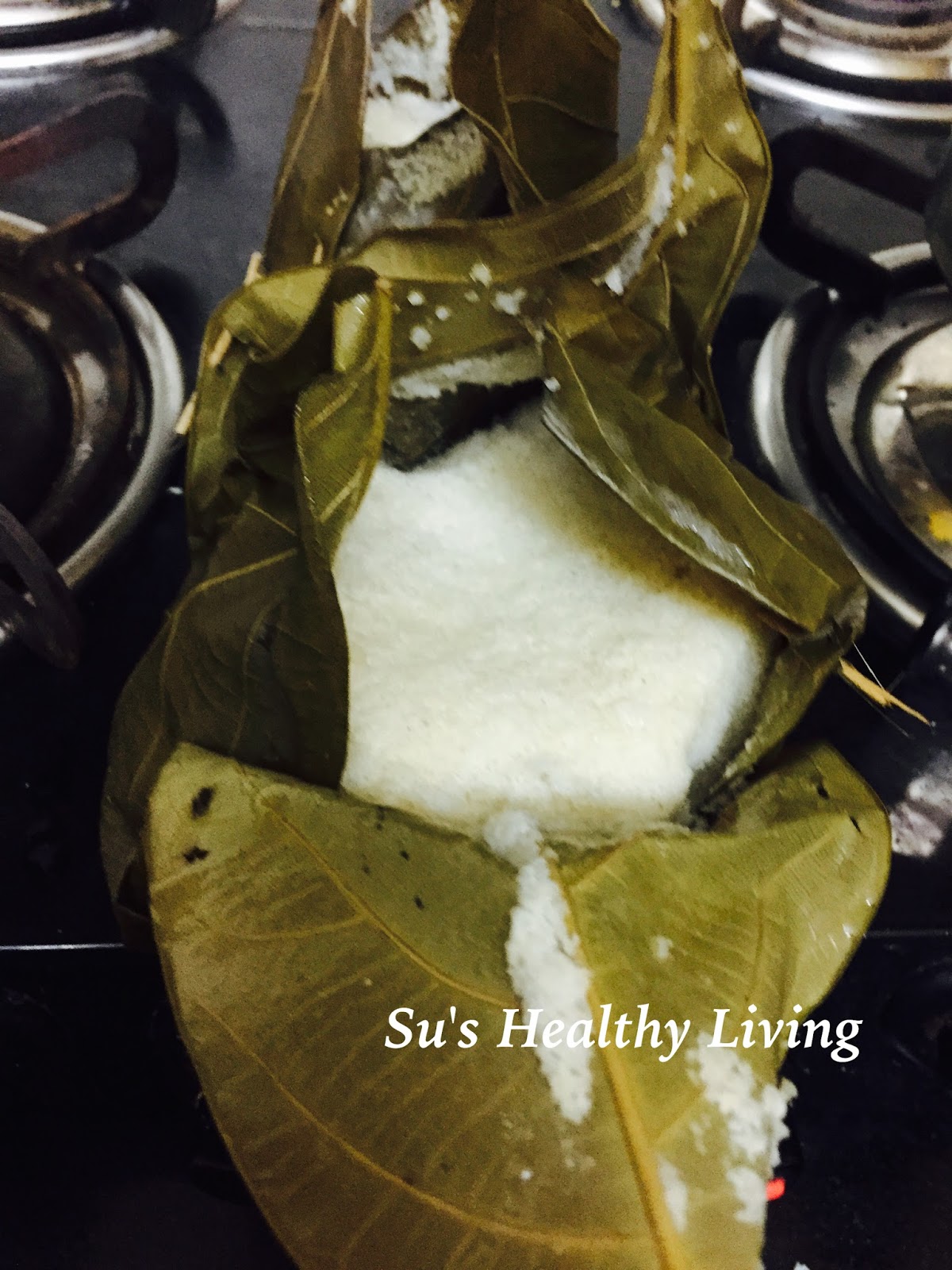
Khotto & Mudo are two very traditional Mangalorean Konkani dishes that are prepared on auspicious/special events be it religious festivals or weddings, engagement parties and even during death anniversaries. Khotto is basically idlis ( rice-lentil cakes) that are made in moulds/cups made out of jackfruit leaves while Mudo is idli made in a cylindrical mould made out of some leaves that grow in the wild. It is believed that these are basically leaves of a plant that bears these flowers called "Bingaru".


Mudo is usually available during rainy season or the festival season in South Canara region. I cannot speak about elsewhere. If you are aware of other places that use these, please do share with us. Khotto, however is available all through the year as jackfruit leaves are available all year round. Most people have jackfruit trees in their backyards or somewhere close to them, so it is easily accessible to them. The problem however is that not everyone knows how to put the four jackfruit leaves together to make the Khotto cup/mould. I recently was in India on vacation and had a chance to videotape my mother making Khotto out of the leaves. I am going to share that video with you as soon as I have had a chance to edit it.


The batter used in both Khotto and Mudo is the basic idli batter except that during festivals, the rice in the idli batter is replaced with sooji or  varai / samo. You can find the recipe for the same here. Just replace the rice with samo. The difference however is in flavor in each of these due to the leaves that are used. Each one imparts a distinctive flavor and smell to the idli which can only be understood by someone who has eaten them. It is truly a specialty. When I went home this time, I refused to eat mere idlis. I ate all the mudos and khottos that I could. Khottos and mudos take longer to cook due to the volume and density of each one of them depending on the size. Mudos take even longer than khottos to cook.


Servings: 6


Ingredients:


For the mould ( Khotto):
Jackfruit leaves: 24 medium leaves
Thin wooden skewers: 50 in number

For the mould ( Mudo): get readymade ones.

For the batter:
Urad dal: 1/2 cup
Cream of wheat( sooji):  1 cup
Water: 1 to 1 1/2 cups to grind urad dal
Salt to taste ( approximately 3/4 tsp)

Method:

For the mould ( Khotto): See the pictorial below:


For the batter:

Soak Urad dal for at least 3-4 hours.

Wash sooji/cream of wheat  thoroughly . Take it in a heat-proof bowl. Boil 5 cups water in the idli steamer/ pressure cooker, with the steamer plate in it. Place the bowl with the cream of wheat in it . Close the steamer/ pressure cooker and cook it for 10 mins on medium flame. Turn off the flame. Take the bowl out and let it cool down to room temperature.

Blend urad dal in a blender/ grinder , adding water little at a time until it rises to 3 times the volume you started with. Make sure you give the motor of the blender some rest in between. The consistency of the ground urad dal should be fluffy  and light ,not runny.

Pour the blended urad dal in a big bowl/ container.

Now mix the steamed and cooled sooji ( cream of wheat) with the  urad dal , cover and let it sit overnight to ferment. If living in cold region, you can keep it in the cold oven/ microwave overnight.

Next  morning add  salt to the batter and mix well.

Ensure that the batter has fermented well. You can know this when the batter has risen a little in the container. The consistency of the batter should be slightly thicker than the usual idli batter.

Putting it together :

Boil 500 ml of water in the idli steamer or pressure cooker with the steamer plate in.Fill the khotto/ mudo with batter until 2/3 full and steam in the idli steamer / pressure cooker ( without using the weight) on medium- high flame for 30 minutes or until a skewer comes out clean when inserted. Mudo may need another extra 10-15 minutes before they are done. Turn off the heat and let it cool down in the steamer for another 10 minutes before taking them out of the mold.


Once completely cooled, you should be able to gently shake the mould and bring the steamed Khotto out in its entirety without breaking it and re-use the mould for another round of steaming. However, if you are apprehensive of breaking the Khotto, you can peel the mould and remove the Khotto out. In this case, you will no longer be able to re-use the mould.


Serve the khotto/mudo hot with sambar/ chutney or both.


Cooking made easy:


Usually for auspicious occasions, rice is not used for making Khotto/ Mudo. Instead sooji or varai ( samo) is used. For daily purposes, you could use idli rava ( rice rava) or soak and grind rice to make batter, as explained here.

Tip for healthy living:


Idli/ Khotto when served with coriander chutney or Sambhar becomes a complete meal with the essential portions of protein ( urad dal and tur dal), sooji/ rice rava( carbohydrates) and the vegetables in the Sambhar  or the greens in chutney providing essential minerals and vitamins.

Food for thought:


What you do today can improve all your tomorrows. Ralph Marston

Monday, May 18, 2015

Bhenda Sagle ( Okra/ ladies finger in spicy coconut sauce); Meatless Monday.


The amazing thing about Indian cuisine is the endless amount of meatless options! This is because majority of Indians don't eat red meat and most are vegetarians. Indian cuisine and culture is the perfect proof for the fact that people can survive and lead a full and healthy life by following a plant-based diet.

Okra is a favorite vegetable amongst Indians too. Where I come from which is Southern India, okra is long, around 10-12 cms. It is also lighter green in color and is never tough.I became familiar with the short okra only after leaving my hometown. Okra is known as Ladies finger in India. In Hindi language it is known a "Bhendi ". While there are several ways okra is prepared in India, the traditional way of preparing in the konkani community is by cooking it in a spicy coconut-based sauce. This dish is known as "Bhenda Sagle " and is a popular dish in the konkani community. It is not too spicy, has the flavors of coriander seeds and is gentle on the stomach. It goes great with any kind of rice. Last but not the least, it is quick, simple and easy to make.


Servings: 4-6


Ingredients:


Okra/ ladies finger/bhendi: 250 gms or 8 oz
Freshly grated coconut: 2 cups
Coriander seeds: 1 tbsp
Dried red chillies: 3-4
Tamarind: marble-sized piece.
Water: 2 cups
Coconut Oil: 1/2 tsp
Salt to taste.

For tempering:
Coconut oil: 1/2 tsp
Mustard seeds: 1/2 tsp
Curry leaves: 1 sprig

Method:


Roast the coriander seeds with 1/2 tsp oil until aromatic. Add the red chilies to it for a minute , roast a little and keep aside to cool.


Wash the okra and pat it dry completely using paper towels or kitchen towels. Then cut it into 1 inch size pieces.


Boil it with one cup water and salt until tender( around 5-8 mins). 


While the okra is cooking, in a blender,grind together the freshly grated coconut, red chillies, tamarind, and coriander seeds to a fine paste . Add water while grinding as needed.

Add the above paste to the cooked okra and bring it to a boil. Turn off the flame.

Tempering:
Heat 1/2 tsp oil in a pan.  Add the mustard seeds. Once the mustard seeds splutter, add the curry leaves and turn off the flame.


Add this to the above pot.

Serve hot with rice.


Clockwise: White rice, dal, bhenda sagle, patrado, moong dal fry, cabbage -carrot stir fry.


Enjoy.

Cooking made easy:


Okra is very slimy. Always wash okra before cutting it. Dry it completely to take away any moisture. Cook it with just enough water and don't overcook it. If overcooked, it disintegrates and you end up with a slimy mess.

Tip for healthy living:


Okra has several health benefits. It is a great source of dietary fiber preventing constipation and GI irregularities.

Food for thought:


We may encounter many defeats but we must not be defeated. Maya Angelou.

Wednesday, January 21, 2015

Tambde bea saaru-upkari ( Creamy Red kidney bean soup) ; Su's healthy living first anniversary special!


Today marks one year of my foray into the world of blogging. Today was the day I hopped onto blogger bandwagon and wrote my first little post: about me and the disclaimer. I did not post the first recipe until 27 th January, 2014. What a journey it has been! Although I still consider myself a novice blogger/ new blogger, I have come a long way from where I began. It has been a journey of continual learning. I have met so many wonderful people which includes fellow bloggers, followers and other food enthusiasts along the way. It would be ungracious of me if I don't express my gratitude to atleast a few of them who have stood by my side, encouraged me and helped me evolve.This list is by no means complete:  First and foremost,I would like to thank my Mother, who taught me to cook at the tender age of 8. She is also my lone champion. She supports me unconditionally in all my endeavors! Next, I have to thank the foodie group on facebook,Chef at large ( CAL as we fondly call it), it's members and administrators for their support. It was CAL that pushed me onto the road of blogging. I am thankful for that push. Next, I would like to thank all my friends and family members who inspired and encouraged me all the way. I definitely have to express my gratitude to Vanessa Potrass and her team at Meatless Monday, who have supported my work and even published one of my favorite recipes in their Earthbound farms Breakfast e-cookbook. That was definitely an honor for me. Angie at the Novice Gardner deserves a special mention. Thanks to her continued hard work hosting Fiesta Friday, we get to interact with all these wonderful food bloggers. And guess what?? This week Fiesta Friday hosted by Angie@the Novice Gardner is also celebrating their first anniversary! Is that coincidence or what! Angie is hosting a massive block party to celebrate this milestone!


If you have not yet been to Angie's Fiesta yet, you definitely should! It is super-fun. Me and her will be joining in the celebrations. A few of my fellow bloggers require to be specifically mentioned: Amrita who blogs at amritavishal127.blogspot.com & Sonal Gupta of simplyvegetarian777 for supporting me, helping me with queries; Jhuls from thenotsocreativecook, who is a champion of new bloggers, for giving me my first guest post and for nominating me for the leiberg award( which I am yet to accept due to lack of time)! Thank you for the honor.


I used to think that I was busy before! But now since the beginning of 2015, it is absolute madness. This has happened due to change in personal circumstances and me not having any help with my two little ones. Well, one has to prioritize in life , right? I have decided that this blog is supposed to be something that I have up do when I have spare time. Therefore I am going to take it easy. I have promised myself not to go crazy about all the imperfections that this blog has and needs to be fixed. there is plenty of work that needs to be done, and will be done in due course of time.

It is only apt that I post something simple, easy and healthy today. I will therefore share with you today a recipe that is common and everyday occurrence in a Konkani household since time immemorial: Saarupkari. You can also call it Saaru Upkari. " Saaru " in Konkani language means " gravy" and " upkari" means "stir-fry". The literal translation would make the dish " gravy stir-fry" or a stir fry with gravy. You would have seen several stir-fries that have been posted by me. This one is slightly different,even though the procedure of making it is simple like that of a stir-fry. This is made with beans and is thick and soupy. Yes, I would translate it as " Bean Soup", konkani style. Believe me when I tell you that making soup cannot be easier than this. This is a pretty staple side-dish in most konkani household. Depending on the bean that has been used, the nomenclature of the soup. Today, I am going to talk about red kidney bean which in Konkani is known as tambde bea. "Tambde" means "red" and "bea" means "bean". So red kidney bean soup would be called tambde bea saarupkari. All that is done for the soup is that you boil the concerned beans with excess water until it is tender enough to your liking and you get a thick gravy.We then add salt and temper it with either mustard, curry leaves , hing and chilli powder or temper it with crushed garlic and chilli powder . Yes, it's that simple!!! And you can enjoy a delicious piping hot bowl of bean soup either all by itself, with rice, or some crackers or a piece of bread.


Servings: 2


Ingredients:


Red kidney beans: 1/2 cup dried or 1 can
Water: 2 cups
Salt: as per taste
Coconut oil: 1 tsp
Garlic: 4-6 cloves
Red chilli  powder: 1/4 tsp( can increase or decrease as per preferred level of spice)

Method:


If using the dried red kidney beans soak it in water for atleast six hours or overnight.  The next day place the beans and water in the cooker. Reduce the flame to low after the first whistle and cook for 15 mins. Switch off the flame. Do not open the cooker until the steam has totally been released.

Once the steam is released, mix the beans, add salt and bring it to a boil.


If using canned beans, rinse the beans and boil it with water and salt.

Tempering:

Heat coconut oil in a skillet. Add crushed garlic cloves to the oil. Sauté until the garlic turns slightly golden brown. Turn off the flame and add chilli powder.


Pour this on top of the beans.


Serve hot with rice/ bread/crackers

Enjoy! I am bringing this hearty soup to Angie's Block party at Fiesta Friday.It is co-hosted by Hilda @ Along the Grapevine and Julianna @ Foodie on Board.


Cooking made easy:


This saarupkari/ soup can be made with any beans. I prefer the dried beans as when you boil them you get a nice thick soupy consistency sauce. The canned beans don't give you the same results, unless of course you use the fluid that comes with the beans. This fluid however very high in sodium and may have preservatives and therefore is not good for you.

For creamier beans, add a pinch of baking soda in the water while soaking the dried beans.

Tip for healthy living:


Avoid canned beans as the aluminum from the can leaches into the fluid. Also the fluid tends to be high in sodium which is not good for the body. Increased consumption of sodium can increase blood pressure, cause water retention in the body.

Food for thought:


Let us permit nature to have her way. She understands her business better than we do. Michel de Montaigne


Saturday, January 17, 2015

Gulla/ Vaingana Sagle ( Stuffed baby eggplant)


Eggplants are a favorite across several cuisines worldwide. In India, eggplants are cooked several different ways, one of the most popular ones being "baingan bharta", in which the eggplant is charcoal roasted , peeled, mashed and mixed with oil and spices. That is yummy. In India, we also find baby eggplants which are most commonly stuffed with various spices and cooked. Again, there are several different ways to do this. Where I am from, which is Karnataka State in Southern India, we make a paste of coconut, roasted coriander and fenugreek seeds, red chillies ,stuff the cute little eggplants with it and slow cook it on the stove-top.
The name of this stuffed eggplant varies upon which kind of eggplant has been used. If you used the green baby eggplant, it is called "Gulla Sagle"and if purple eggplant has been used, it is called "Vaingana Sagle". I like them both!:) Some saute chopped onions in before adding the eggplants in. I like it without the onions and that's how I make it.It is pretty easy to make.


Servings: 4-6


Ingredients:


Baby Eggplant: 1 lb
Coconut oil: 1 tbsp
Mustard seeds: 1 tsp
Curry leaves: 1 sprig
Freshly grated coconut: 1 cup
Dried red chillies: 4-6 medium sized ( depending on your spice level).
Tamarind: marble sized if using dry, 1/4 tsp if using the pulp.
Coriander seeds: 1 tbsp
Fenugreek seeds( methi seeds):  1/4 tsp
Water: 1/2-1 cup for grinding the paste.
Salt: as per taste
Jaggery/ brown sugar: 1 tsp

Method:


Roast separately the coriander seeds and fenugreek ( methi) seeds and keep aside.

In a blender/mixie/ food processor,grind together freshly grated coconut, dried red chillies, tamarind, salt and jaggery  into a fine paste, using water to grind as required. When the paste is almost done, add in the roasted and cooled coriander seeds and fenugreek seeds.

Wash the eggplants thoroughly. Take each eggplant, hold it upside down and make 4-5 slits in it without cutting through the stem.


Using a teaspoon, take little of the ground paste and stuff it into the eggplant via the slits. Keep it aside on a plate upside down. Stuff all the eggplants in this manner.

Heat coconut oil in a frying pan/ sauté pan. Add mustard seeds. When the mustard seeds splutter, add curry leaves.

Now place each of the stuffed eggplant in the pan upside down. Pour in the leftover ground paste.


Cover and cook on low flame until the eggplant is cooked until tender.


Serve hot with rice/ roti/flatbread/bread.


A favorite Amchi( konkani) combination with this is rice and Dalithoy( dal). Just awesome! I am bringing this typical Amchi dish to Fiesta Friday # 51 to my friends there.This will be something new for them all to try! The very creative Jhuls@thenotsocreativecook and the wonderful cook, Juju@cookingwithauntjuju are the co-hosts this weekend. Fiesta Friday is gearing up for it's first anniversary party!
Enjoy!

Cooking made easy:


Eggplant once cut and left in air tends to get discolored ( it turns black). This can be prevented by putting the cut/sliced eggplants in salted water. Salted water is nothing but plain water to which 1/4 tsp salt has been added.

Tip for healthy living:


In Ayurvedic medicine, food plays a great role in healing. They classify different food groups based on their effects on the body upon consumption. They have food that is cooling to the body hence great to be consumed during summertime and if you have inflammation in your body; e.g: ash gourd, bottle gourd, ridge gourd etc. Then you have vegetables that produce heat in the body and are great winter foods; e.g: ginger. Now there are certain foods that impede healing and unfortunately eggplant is one if them. Therefore if an individual has inflammatory condition, surgery etc, it is recommended that they do not eat eggplant.

Food for thought:


A true lover always feels in debt to the one he loves. Ralph W. Sockman

Sunday, January 11, 2015

Kuvale Sasam ( Ash Gourd/Wintermelon cooked in mustard flavored coconut sauce)


Kuvale ( Ash Gourd or Winter Melon) is one of my favorite vegetables. It is not only delicious, it is good for the body. It soothes the digestive system. Apart from Kuvale puli koddel, another common and popular dish made by konkani GSBs with this vegetable  is kuvale sasam. It is a very simple and humble dish made by adding cooked ash gourd pieces to a sauce made by grinding together coconut, red chillies, tamarind and a few mustard seeds. The sauce should not be spicy.It is absolutely delicious. You can also eat it like a stew.


Servings: 4


Ingredients:


Ash gourd/Wintermelon/ kuvale: 1 lb slice.
Water: 1/2 cup + 1/2 cup for grinding.
Freshly grated coconut: 1 cup
Dried red chillies: 3 medium sized ones.
Tamarind: marble sized if dry; 1/8 tsp if using the pulp.
Mustard seeds: 1/2 tsp+ 1/2 tsp
Curry leaves : 1 sprig
Coconut oil: 1 tsp

Method:


Cut the ash gourd/Wintermelon/kuvale into medium sized pieces.  Add the pieces to a pot, add 1/2 cup water, 1/2 tsp salt and let it cook until tender ( usually takes around 10-15 mins).

In a blender/food processor/mixie, grind together freshly grated coconut, tamarind, dried red chillies to a fine paste. When the paste is almost done, add 1/2 tsp mustard seeds and pulse twice.

Add the ground paste to the cooked ash gourd/Wintermelon/kuvale. Mix well and bring it to a boil. Turn off the flame.

Tempering:

In a small frying pan, heat 1 tsp coconut oil. Add mustard seeds. When the seeds splutter, add curry leaves. Turn off the flame. Add this to the above pot.


Serve hot with rice/roti.

Enjoy!

Cooking made easy:


Whenever you cook vegetables that have a high water content, make sure that you do not add too much water. Just add enough water so as to help the cooking process. Otherwise, the additional water given off by the vegetable will make your sauce too thin, watery and tasteless.

In case you do end up with a lot of water after cooking the Wintermelon , remove some of the liquid and keep aside before adding the ground paste. You can always add the reserved liquid to the pot depending on the preferred consistency of the sauce.

Tip for healthy living:


If you have a upset tummy, trying mixing a pinch of salt and hing ( asofoetida) into a cup of buttermilk and drinking it. This helps settle the tummy. ( This is not for people who are lactose intolerant)!

Food for thought:


The creation of a thousand forests is in one acorn. Ralph Waldo Emerson